


Insights

Why Great Leaders Celebrate When Team Members Move On
Many managers fall into the trap of optimizing only for their immediate team—the subsystem they directly control. This makes sense on one level; you're evaluated on your team's performance.
But truly exceptional leaders understand that subsystem optimization can lead to overall system degradation. If every manager hoards talent, the organization stagnates. If teams become too comfortable, growth opportunities diminish.

Identifying Leadership Friction in Teams
The goal isn't to eliminate all friction - some friction is necessary for traction. The goal is to ensure we're not unwittingly creating additional friction that slows our teams down or sends them in conflicting directions

The Foundations of Amazing Teamwork
Creating an exceptional team requires intention and effort, but the rewards are worth the investment. When these six foundations are firmly established and actively maintained, teams can achieve remarkable results while creating an environment where everyone flourishes. Excellence in teamwork isn't accidental - it's the product of careful cultivation of these essential elements.

The Ultimate Guide to Cultivating Team Apathy
Remember, creating true apathy takes dedication. You can't just be a bad leader – you need to be consistently, persistently, and methodically soul-crushing.

Stepping Forward - The Hidden Power of Team Commitment
The psychology behind this approach aligns perfectly with James Clear's insights on identity-based habits in his book "Atomic Habits." When we incorporate something into our identity – whether it's being a committed team player or a coachable athlete – our actions naturally flow from that self-image. It's no longer about forcing ourselves to follow rules; it's about staying true to who we've declared ourselves to be.

Do You Have “That Guy” on Your Team?
Have you had this discussion with your team? Are they holding people accountable in ways you are unaware of?Here’s a tip - Have a theoretical conversation on what it takes to be a good teammate. Have the team list out qualities and agree on a top 5 . If there is an issue on your team, a “quality” will be surfaced that is being broken.
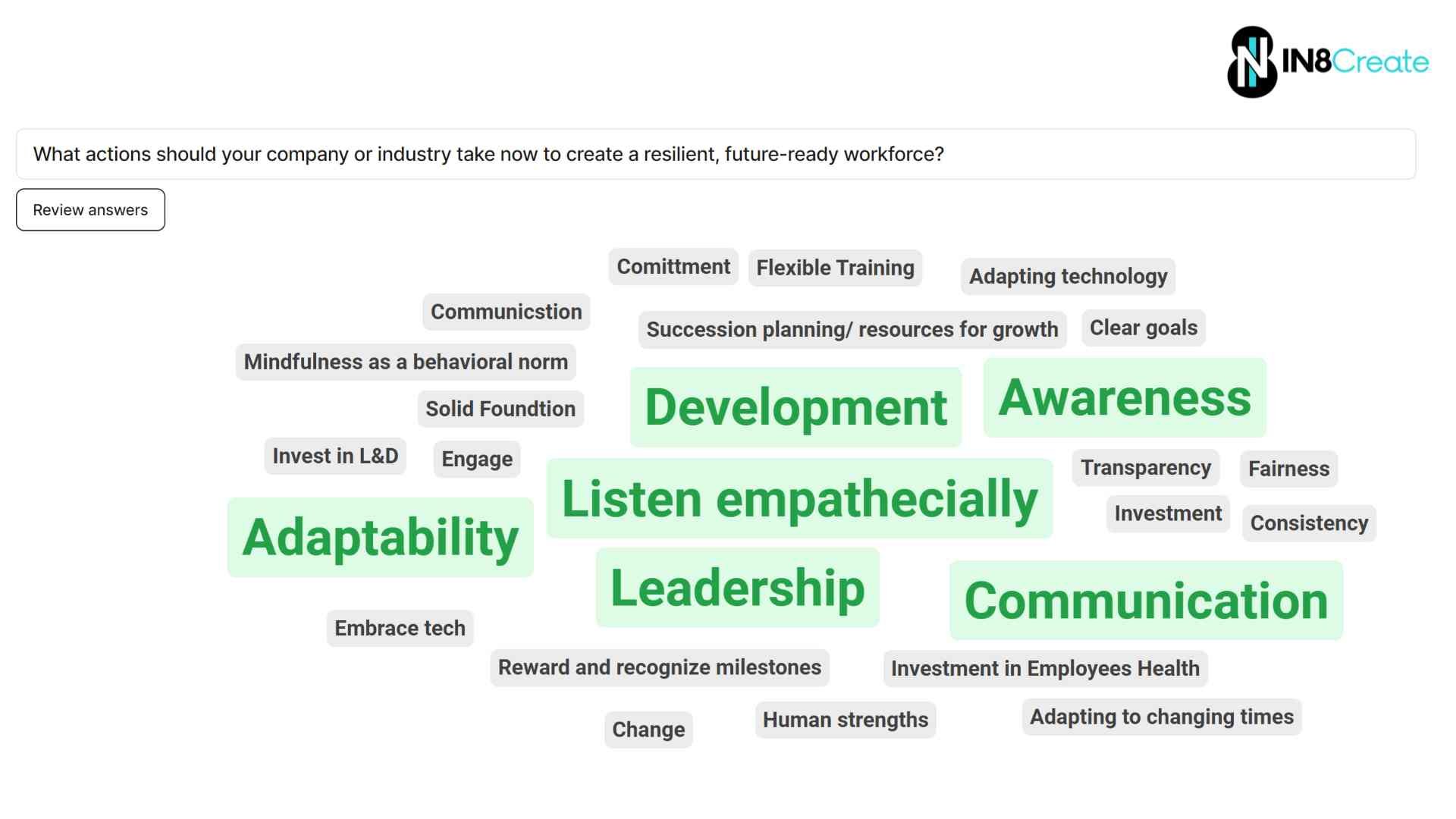
Creating A Resilient, Future-Ready Workforce
In our recent "Build Your Future Workforce" workshop with the Westchester Human Resource Management Association (WHRMA), we explored a crucial question: What actions should companies take now to create a resilient, future-ready workforce? The responses from participants were diverse and insightful, highlighting the complexity of this challenge

Fostering Team Success Through Individual Responsibility
By fostering an environment where team goals are prioritized and each member feels responsible for the team's success, organizations can create stronger, more cohesive teams. Remember, a great team is not just a group of talented individuals, but a synergistic unit where the whole truly becomes greater than the sum of its parts.

The Power of a Spotter in Team Meetings
By appointing a “spotter” in your team meetings—someone whose sole responsibility is to observe body language and verbal cues—you can ensure that these often-overlooked signals are captured and addressed in real-time. This role can help unearth key insights and balance the extrovert/introvert equation, ensuring everyone's perspectives are considered.i

Harnessing the Power of Competition in Team Building
In every team, competition inevitably emerges. Individuals often compete for the best idea, attention, or simply to satisfy their ego. This competitive spirit can be harnessed positively, transforming it into a driving force for innovation and problem-solving. The key lies in how we frame competition within the team dynamic.

Solving for Conflict in Teams
I have found that through the many workshops I have done, that MOST of the time, when everyone gets a chance to share their wants and needs, it's not all that hard to build out win-win scenarios. Everyone needs to slow down, define the problem clearly, and flush out all perspectives. Once the nuance of the situation is unearthed, it's simple to see the higher level solution.

Building Empathy in Teams With Personal Stories
Steve from accounting becomes Steve the guy who played baseball in the Little League World Series. Your team has a ton of stories like this and when shared, they will add depth and dimension to the relationships in your team. When we can hear, see, and understand the depth and dimension behind our teammates histories, we gain appreciation for them as a person. We understand they are more than the role they fill.