

Good people.
Flat results.
Everyone on your team has been on a great team and a terrible one. We help them remember what made the great ones work, and build one version of good you all share.
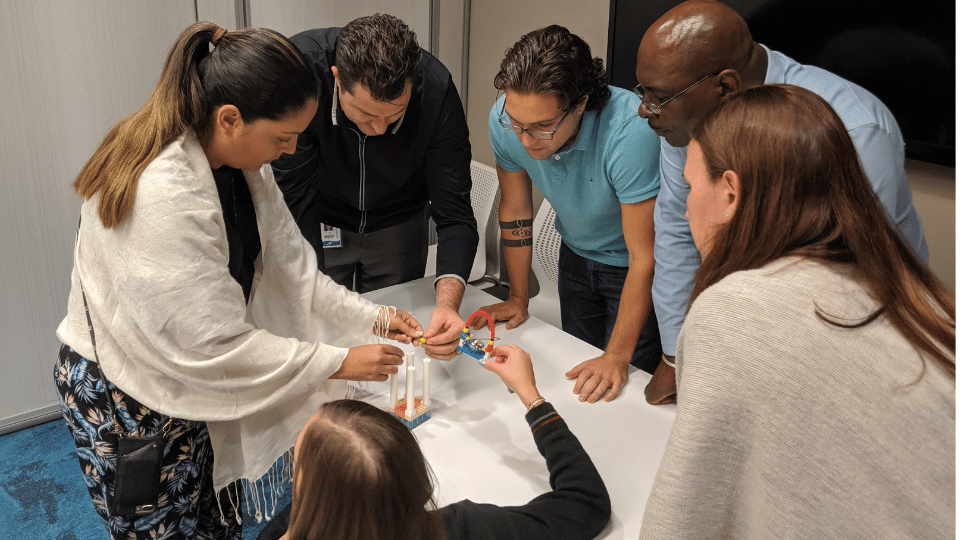
Think about the best team you've ever been on.
You can still feel it. The energy, the pace, the way problems got solved before anyone had to ask.
Now think about why it worked.
You can feel that one too. The meetings that went nowhere, the work that got done twice, the people you stopped asking.
Think about why that happened.
Most of us learned what a good teammate is as kids.
In an orchestra, listening means matching someone's tempo without a word. On a soccer field, it means calling for the ball. Ask a kid about their worst team and you'll probably hear about a group project where half the group didn't care.
We carry those lessons into every team we join after that.
Read: Team Building's SecretYour team carries all of those stories, and nobody compared notes.
Each person learned "good" somewhere different. To one person, respect is a fast reply. To another, it's being left alone to do the work.
So when someone works differently, it can look like they don't care. In their story, they're the one doing it right. Everyone is the hero of their own version, and the teammate who works differently ends up cast as the villain.
That's the friction you can feel and can't quite name. Good people, each running a different picture of what good looks like.
We help your team remember what made their best teams great.
Through building and story, the great teams and the terrible ones come back, along with what each person needs and what they need to avoid. Here's what your team walks away with.
A shared picture of what amazing looks like
Built from your team's own best teams, in their own words. One version of good everyone can point to.
An honest list of what could derail it
The pressures, habits and old stories that pull good teams apart, named while everyone is calm.
Ways to keep it on track
The behaviors, check-ins and processes that hold the picture in place once the work gets busy again. How far this goes depends on the depth of the engagement.
Every team starts with its stories. From there, we go as far as you need.
Some teams find what they need in a shared picture of good. Others keep going, into how each person works, the agreements that hold it together, and how the team fits with the groups around it.
We'll figure out the right depth together on the first call.
How we fit
Read moreThe teams around you, what they need from you and you from them. Win-win over zero-sum, since you're all after the same goal.
How we operate
Read moreWorking agreements your team writes together. How decisions get made, how conflict gets handled, what comes back to the leader and when.
How we each work
Read morePrinciplesYou, built by Ray Dalio, Adam Grant and Brian Little, or the assessment you already use, plus building. Working differences stop reading as bad behavior.
Our story of good
Read moreBest and worst teams, built and told. A shared version of amazing, and the threats that could derail it.
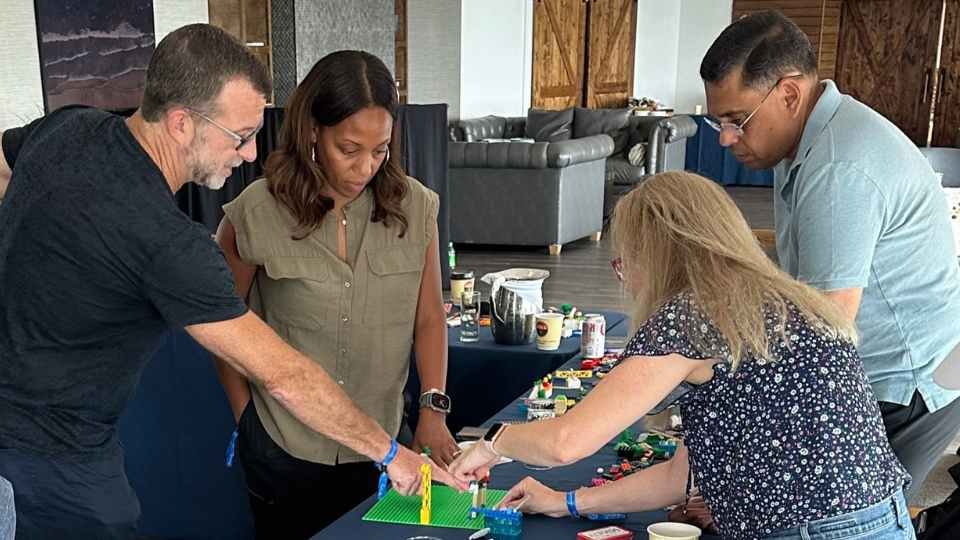
Everyone builds. Everyone shares.
Each person builds their answer to the same question, then explains what they built.
A story that lived in someone's head ends up on the table, where the whole team can look at it. The newest person in the room gets the same airtime as the loudest. People push back on a model instead of a person, so the real conversation starts sooner.
The method is LEGO® Serious Play®. No building experience needed.
"In one session, my team was able to visibly see why we were finding progress so slow on a project. The models we built clearly showed we were each solving a different problem."
For leaders with a capable team that isn't adding up.
You might lead eight people who each work hard and somehow keep stepping on each other. Or a leadership team that agrees in the room and drifts apart by Thursday.
If you can feel the friction and can't quite name it, that's where we start.
Keep reading
A team that agrees on what good looks like.
A 30-minute call. We'll ask about your team, what's working and what isn't, and tell you honestly where we'd start.
Book a 30-minute callOnward,
Brandon