

M&A integration
Merged on Paper.
Divided in Practice.
Every deal is built on a plan. The people who make it real every day have rarely seen it, and you've rarely seen their day. We connect the two to de-risk the investment and keep your targets on track.
Start a conversation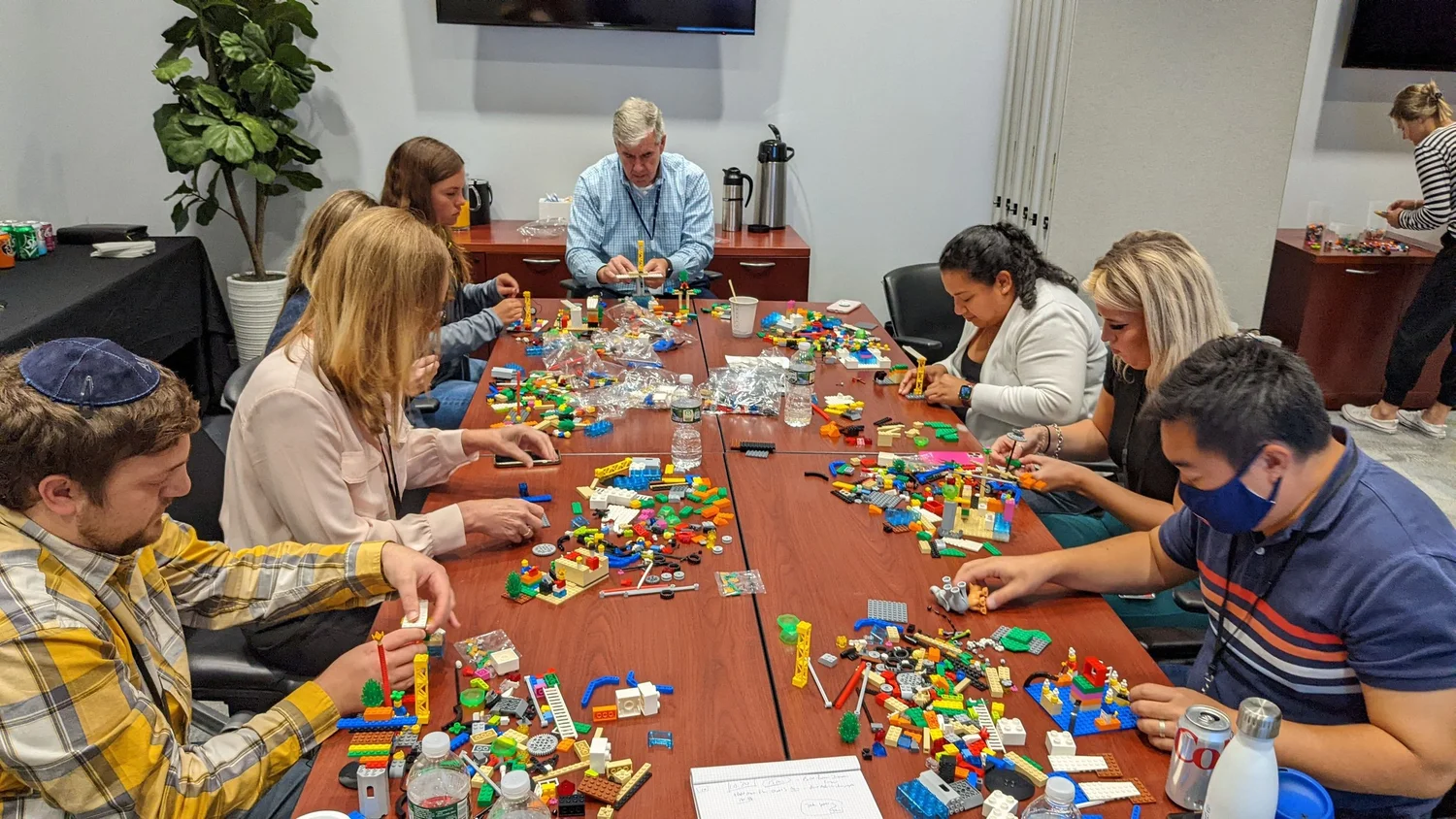
When the deal is announced
The day a deal goes public, two things happen at once.
At the top
It's one of the best days of the year. Leaders have lived with the thesis for months. They know the value creation story, the synergies, and why it all makes sense.
Everyone else
They're hearing it for the first time. Their first question is about themselves. What happens to my job, my team, my boss?
From that moment, the business runs at two altitudes. Vision and value creation live at the top. The work lives on a Tuesday: the customer call, the schedule, the handoff that used to take a minute. The plan assumes those two levels are connected. Usually they aren't, and the people on the Tuesday level carry most of the value you paid for.
That gap between the plan and the people running it is where integrations slip.
Same plan, different language
Both are right. They're using the same words to talk about different things.
The CFO hears "consolidate vendors" and sees savings. The project lead hears the same line and sees three relationships they spent years building, a supplier who already called with questions, and nobody to ask.
Most integration communication gets built at the top and sent down. It's accurate. It just doesn't answer the questions people are actually asking.
The people who decide how a message lands often aren't where you'd expect on the org chart, either. Every business has a few people everyone goes to. The scheduler who knows which jobs will slip. The senior manager everyone checks with before a client call. They carry information and hold teams together regardless of title. When they go quiet, or leave, the business feels it long before you do.
The part nobody has a method for
Systems, contracts, and org charts have playbooks. The people side gets a town hall and a survey.
Every integration leader we talk to names some version of the same thing.
There's a name for what happens next: the merger effect. It's been studied for decades. When people aren't sure where they stand, they keep their heads down. Decisions get vague because nobody is sure who owns them. And the extra effort that used to go into the work gets channeled into staying safe, like waiting to be told instead of guessing wrong in front of the new owner.
None of it shows up in a status meeting. People still say yes. They still show up. They just stop doing the extra things nobody ever had to ask for.
Vision and value creation are theories until they make sense on a Tuesday. Someone has to ground them in the decisions people make every day, and bring back what those people see that the plan missed. That's the work.
We do it with LEGO® Serious Play®. People build models of what's actually happening, then talk about the model. It sounds unusual. It works because the critique lands on the bricks instead of a colleague or the boss, so people say in an hour what they'd sit on for months in a meeting.
What is LEGO® Serious Play®?
A structured method developed by The LEGO Group with business school researchers in the 1990s. Everyone builds an answer to the same question, then explains what they built. Everyone talks, including the people who usually don't. Hard things get easier to say when you're pointing at a model. No LEGO® experience needed. People start building before their internal editor kicks in, so what lands on the table is closer to what they actually think.
More on the method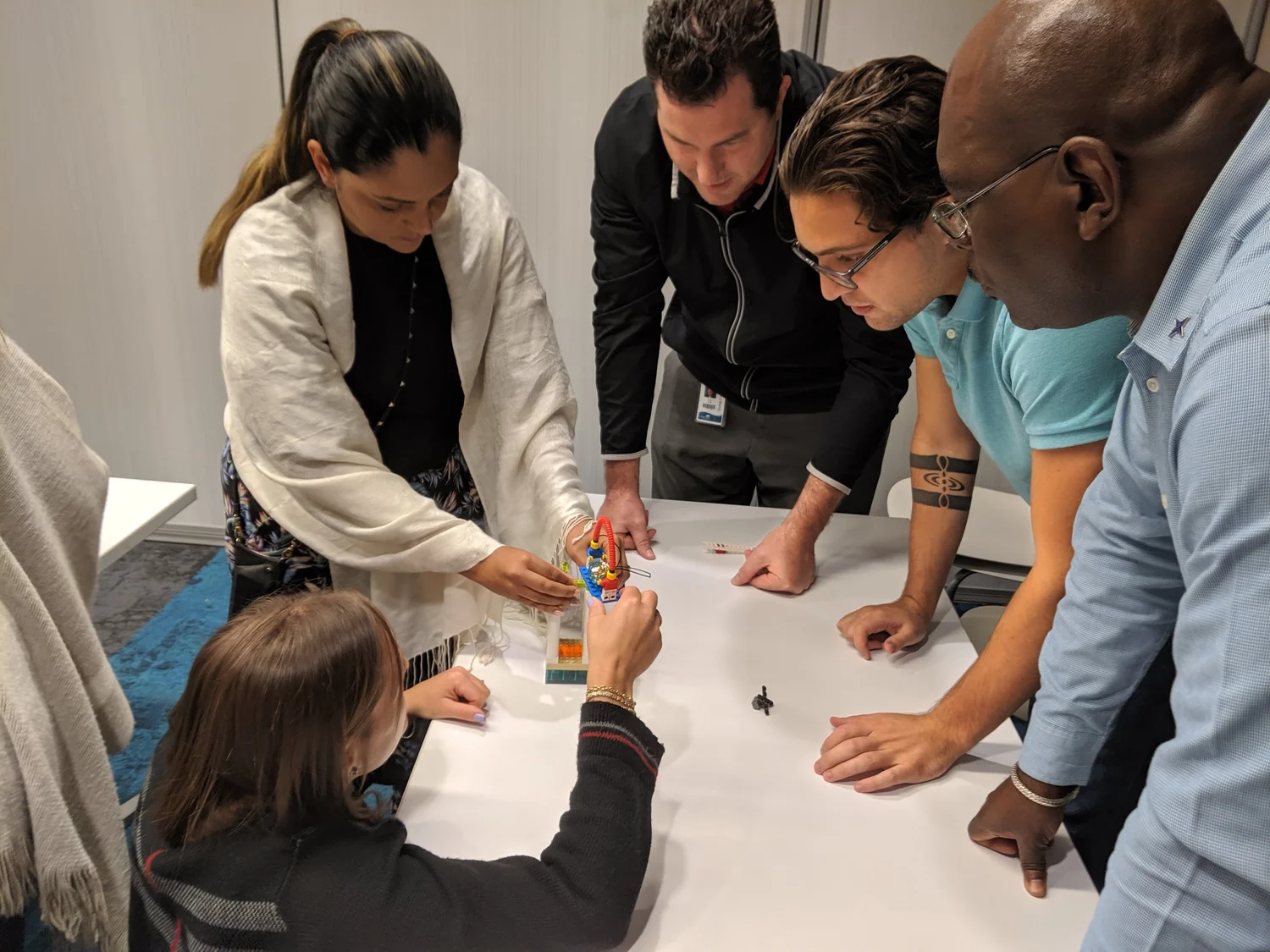
Client story · Oomph Inc.
Leadership wanted the real version, not the polite one.
Six months after a restructure, digital agency Oomph wanted to know how people were really doing before pushing into its next stage of growth.
We brought the business units into one room. People built what the changes felt like and what they needed to do their best work. Then the groups combined what they heard and looked for common ground.
What needed to be said got said, including the sensitive parts. The biggest issues were around communication and how decisions get made. Once it was all on the table, what leadership wanted and what people needed were closer than anyone expected. Leaders walked out with specific fixes in both areas.
"The LEGO® workshop with IN8 Create was a fun, thoughtful way to open up about how we're feeling at work. It encouraged personal connection, sparked meaningful ongoing conversations, and ensured every voice was heard."
Jana Aubin, Director of Operations & Finance, Oomph. Results from 14 participants, surveyed right after the session. Read the full Oomph story →
How we work
One engagement, built in layers. Start where you need to.
Fault Lines
We start with the people everyone actually goes to, wherever they sit on the org chart. A fault line is where pressure builds quietly, the place the business would give first if something shifted. We map where that risk sits and who the business really runs on, so you know where to look before anything moves.
Scaffolding
We build the structure that connects the plan to the work. Working sessions that turn the value thesis into Tuesday decisions, and a standing line between leadership and teams so what people know keeps reaching you. Communication gets built for each level, so the CFO and the project lead both get what they need from the same plan.
Systems Support
Once the structure is in place, we keep it working. Regular check-ins, fresh signal from inside the business, and reinforcement for the behaviors you want to keep, so the integration keeps moving toward its targets after the spotlight moves on.
Why an outside party
We sit outside your reporting chain.
People tell a neutral party what they won't tell a new owner yet, and they tell it sooner. We bring it back straight, in a form you can act on.
Who we work with
Anyone accountable for making a big change pay off.
On the deal side, that's sponsors, operating partners, and the leaders running integration, before or after close. Inside the business, it's executives and functional leaders carrying a transformation, a restructure, or a new strategy that has to land with the people doing the work.
If the plan made sense in the room and isn't showing up in the work, we should talk.
The lag
The leading indicators live in people.
Performance reporting is a lagging indicator. By the time it shows in your numbers, it's been true inside your teams for a while.
Lost sales and lost people are the last things to show up. By the time a key account walks or the person everyone calls resigns, the reasons have been sitting inside your teams for a long time. The leading indicators exist. They live in people, and you can get to them now.
Thirty minutes. A few specific questions about where things actually stand. No deck.
Book a 30-minute callOnward. Brandon Wetzstein, Innate Create
Merged on Paper.
Divided in Practice.
Your team knows where the integration is stuck. We get them to say it out loud, while there’s still time to act on it.
What happens around month four.
Most integrations look clean for the first hundred days. The plan is solid. People are still polite. The deal logic still tracks.
Then month four hits.
Two teams that should be one are still on separate Slack workspaces. The acquired engineering lead keeps needing more time on the integration. A VP agrees in the steering committee and tells their team something different in the hallway. Talent you couldn’t afford to lose is updating their LinkedIn.
You can feel it. The synergy targets you put in the deck are starting to feel like fiction. And the obvious tools aren’t reaching whatever it is that’s actually getting in the way.
The part nobody has a method for.
Every integration leader we talk to names some version of the same thing.
The deal model never accounts for what people aren’t saying. Culture can’t be measured from behind the diligence wall. Commercial teams slow down post-close because nobody is sure of their role yet. The playbooks cover systems, contracts, and org charts. The human layer is the part that surfaces six months in, when there isn’t much room left to fix it.
You probably have a strong IMO. A culture survey going out. A communications cadence. None of that is the issue.
The issue is that people hold back when there’s still ambiguity about whose team they’re on. So the real concerns route through hallway conversations, side-channel Slacks, and exit interviews you’ll see eighteen months too late.
That’s where we work. We surface what teams won’t volunteer through normal channels, fast enough that you can still do something with it.
Ways to work together.
Three ways to engage. Each one is scoped to the deal.
Integration Read
Integration Engagement
Operating Partner
What a half-day surfaced.
Six months after a major organizational change, leadership at a thirty-four person company needed to know what people actually thought. Not the polished version.
They were watching key staff disengage and the next quarter’s plan was already wobbling.
We ran a half-day session.
“It allowed us to go beyond the surface level.”
Survey results from eighteen of thirty-four participants. The engagement was a post-restructure realignment, not an M&A integration. We’ve included it because the dynamic is the same: a team six months into a major change, leadership unsure what people actually believe, real concerns not surfacing in standard meetings.
Who we work with.
Most integration leaders we talk to hit a wall around month six.
The obvious work is done. Teams are saying the right things and not executing. The next board update is six weeks out.
If that’s landing, let’s talk. Thirty minutes. A few specific questions to surface where the integration is actually stuck. No deck.