
We all know a good leader when we've worked for one.
Most of us have worked for a leader we'd follow anywhere, and for one we learned from the hard way. We remember both clearly. Few of us have put that into words or checked it against how we lead on a normal week. In this program, a small group of leaders does that work together and takes it back to their teams.
Knowing what good looks like is the easy part.
Think of the leader you'd follow anywhere. They told you what they needed and why. You knew where you stood. You could raise a problem without paying for it later.
Now think of the one you learned from the hard way. Expectations showed up after you'd missed them. The meeting said one thing and the hallway said another. You spent more energy reading the room than doing the work.
Most leaders can describe both in detail. Far fewer have asked what those years taught them about the leader they're trying to be, or noticed where they've drifted toward the second one.
Leadership happens inside a system. Start by seeing it.
Every leader works inside a web of stories, expectations, and rules nobody wrote down. Most of the frustration you deal with comes from that system, and most of it is invisible until someone points at it.
Everyone is the hero of their own story.
Ask five people what's getting in the way and you'll hear five answers. Each makes sense from where that person sits. In each one, the person telling it is doing their best and someone else is the problem. Your team has a story about you, too.
Under every story, something unsaid.
Assumptions: what I think you already know. Expectations: what I think you'll do, and by when. Norms: what I think this group rewards and what it lets slide. When these stay unspoken, people guess, and the guessing is where friction starts.
Where a message breaks.
Did it arrive? Did it land the way you meant it? Could they act on it, and would they? A leader who knows which of the three failed stops guessing and starts fixing the right thing.
Up as well as down.
The same system runs above you. Your boss has a story, unsaid expectations, and a message that may not have arrived either. Leading well includes managing up with the same clarity you want from your own team.
What you believe. Who you're trying to be. Who you refuse to become.
Once you can see the system, the next question is where you stand in it. Working with other leaders, you put your own leadership into words.
You put three things into words. What you believe about how people do their best work, what your team can count on from you, and the leader you've seen up close and decided never to be.
Then the harder part, where that identity comes under pressure. Time pressure turns clear asks into vague ones. You feel the pull to protect your territory or your decision rights. You hold back because raising something means more work. "I" drifts into a royal "we," and nobody owns anything. Name these while you're calm and you'll catch them when you're not.
Back to your team, with something to run on.
A leadership identity only matters if it changes a Tuesday. The last part of the program is application: how you make decisions, how you set expectations, and how you talk with your team about the things that usually stay unsaid.
Learning alongside other leaders, with the stories on the table.
This work happens in a cohort. Leaders learn more from each other's stories than from any model we could hand them, and it's easier to see a pattern in someone else's situation before you spot it in your own.
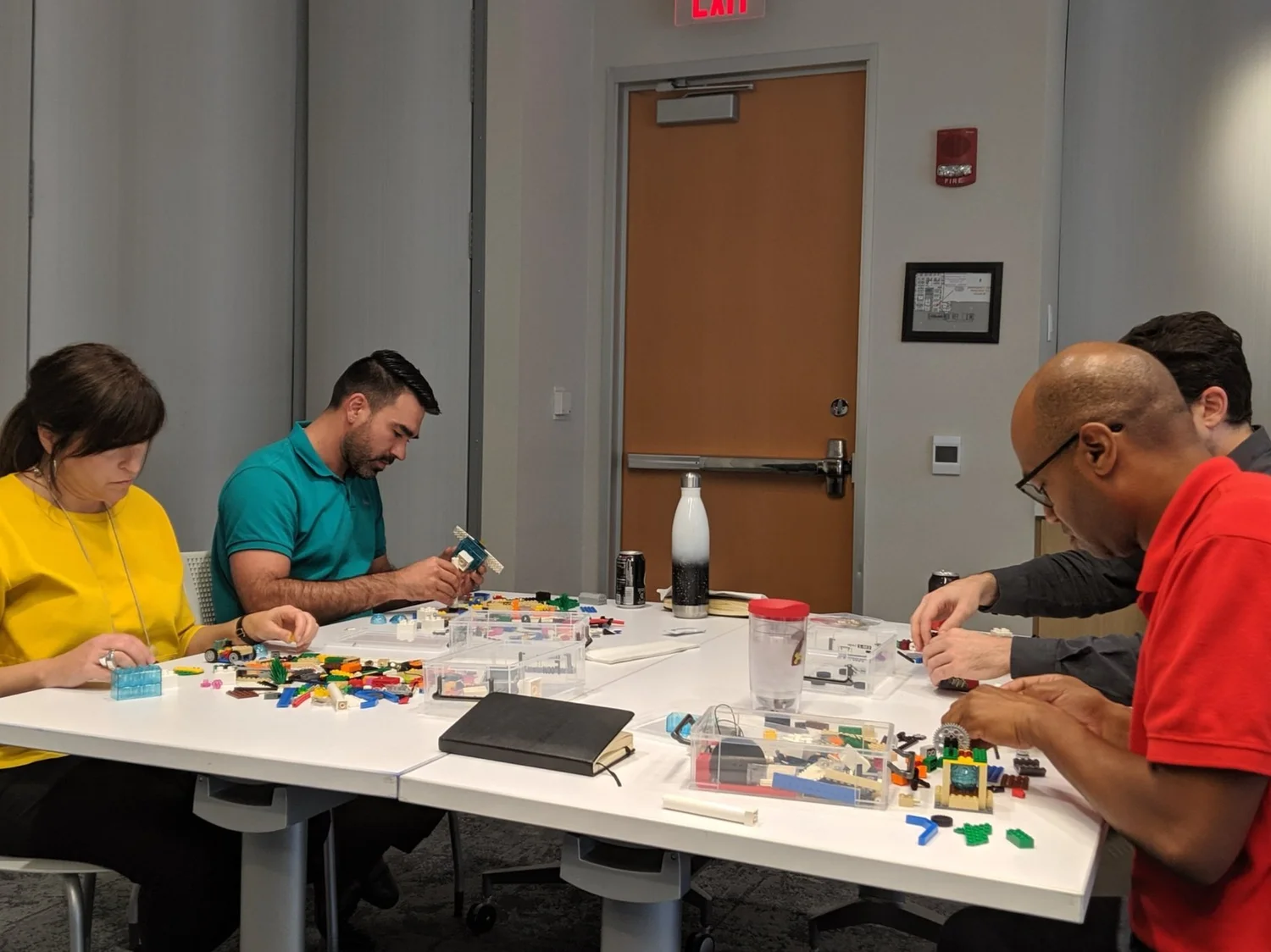
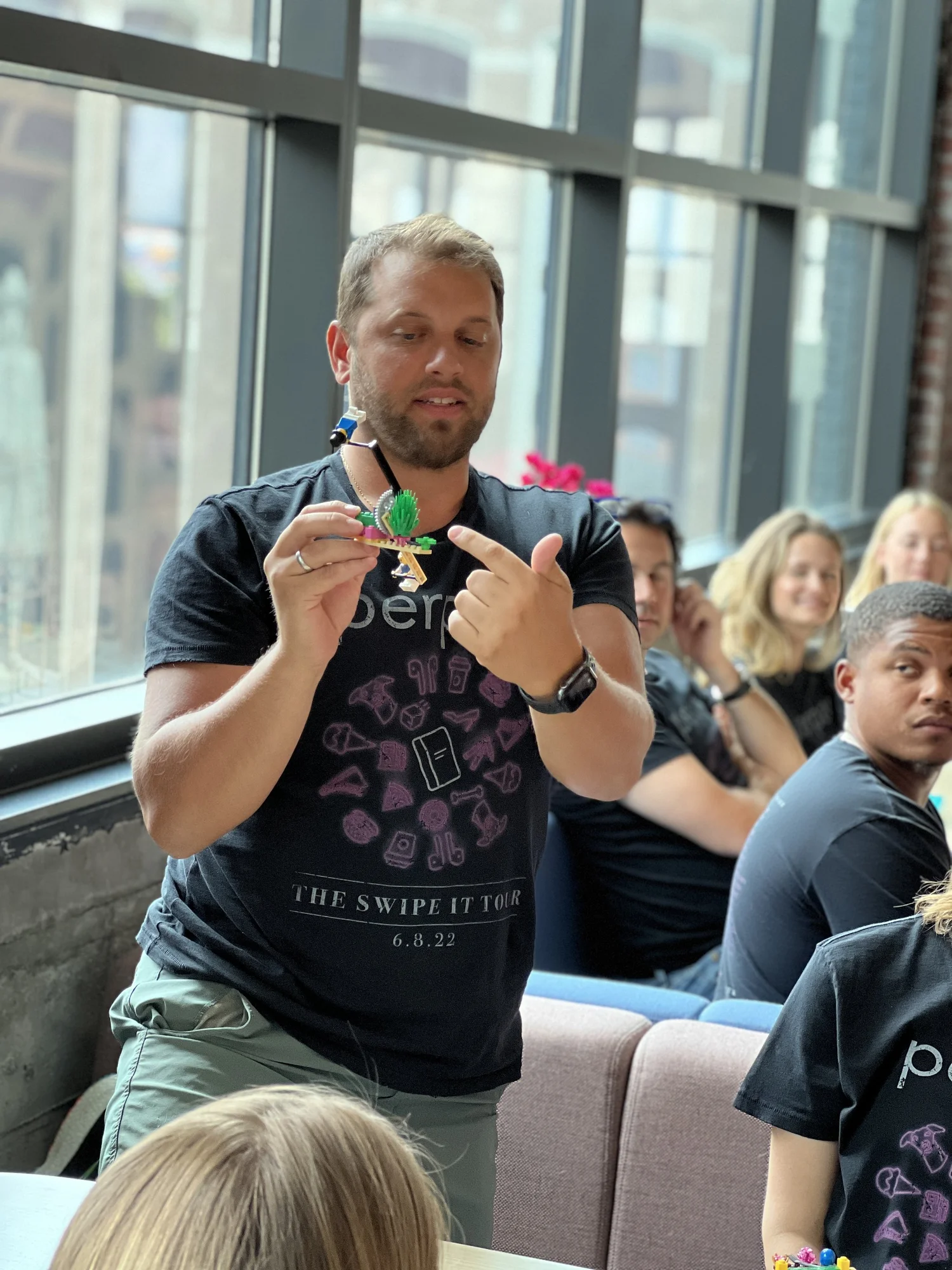
We use LEGO® Serious Play® for the parts that need it. Each leader builds their answer to the same question, then explains what they built.
Stories become visible.
A belief about leadership that lived in your head is now on the table where you and the group can look at it and ask about it.
Everyone contributes.
The newest leader in the room builds and shares the same as the most experienced.
The model carries the disagreement.
People push back on a build instead of the person who made it, so the useful conversations happen sooner.
What is LEGO® Serious Play®? A structured method developed by The LEGO Group with business school researchers in the 1990s. No building experience needed. People start building before they have time to edit themselves, so what lands on the table is close to what they actually think. More on the method
A senior executive team had been pulling apart for months. Several of its leaders had asked for help. The CEO was reluctant, and agreed once enough people asked.
Over three hours of building, the group surfaced what was dividing it. The leaders cared about three things that were now in open conflict: psychological safety, candor, and rigor. Each person built a model that made where they stood unmistakable. For the first time, everyone could see the whole picture, including the CEO's.
The CEO then stated their position. No compromise, and no shared definition.
Several executives left over the following months. They left calmly, knowing exactly what they were choosing and why. The ones who stayed did so with their eyes open.
A cohort of leaders, over time.
Small groups, typically six to ten leaders, from one organization or several. The three parts run in order, with time between sessions to notice the system at work and bring what you saw back to the group.
90-day program
Monthly cohort
Sprint sessions at your location
For organizations that want better leaders and aren't sure how to get them there.
You've probably invested in leadership development before. The theory was sound, a little obvious at times, and Monday looked about the same afterward. Leaders learn by doing, from their own stories and from the leaders working through the same questions beside them. This program is for CEOs and people leaders who want that kind of development for the leaders in their organization.
If you can picture the leaders you want in your organization and haven't found a way to get them there, we should talk.
Leadership development built from your own stories.
A 30-minute call. We'll ask a few specific questions about where you and your leaders are, and tell you whether a cohort makes sense.