

Executive coach Jamie Librot on work friendships, socializing ideas, and finding your goby
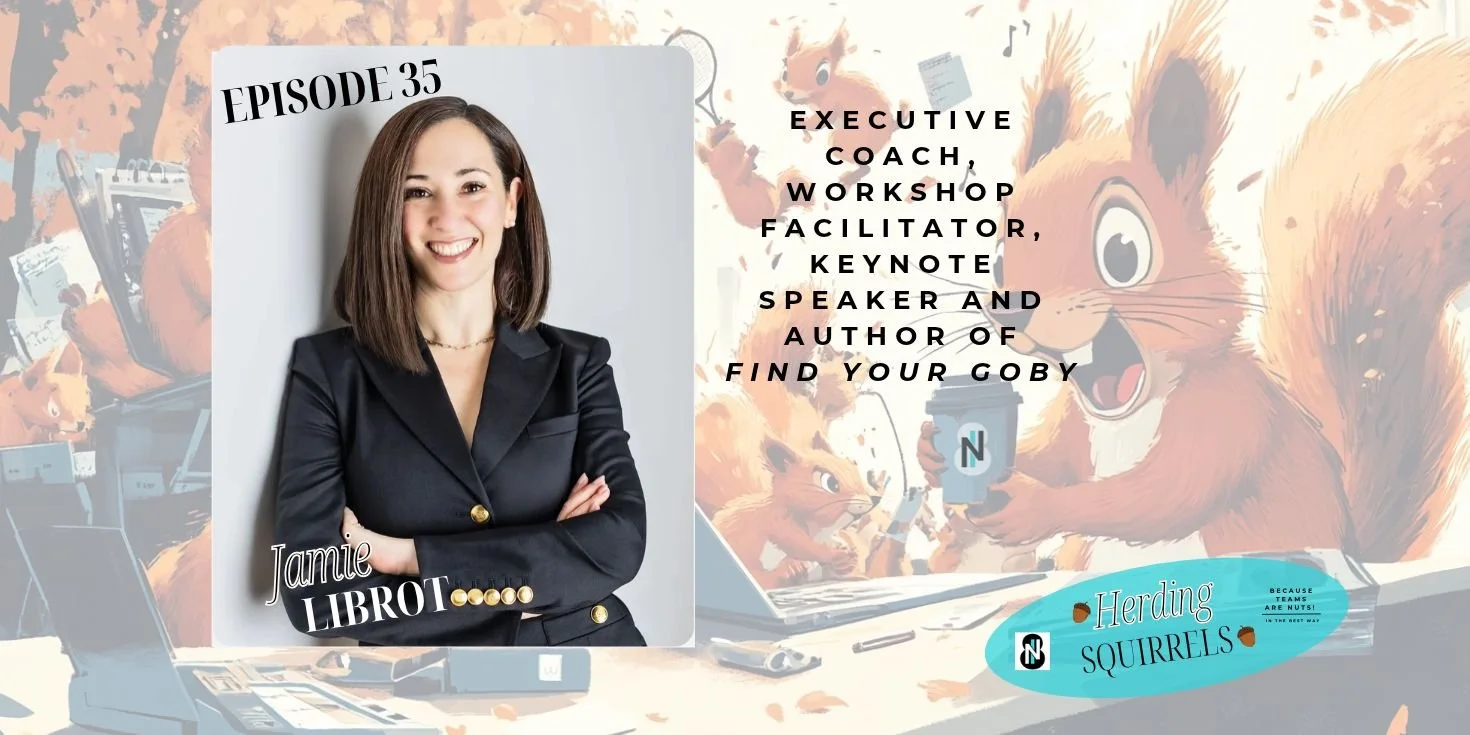
Jamie Librot and I talk about why the real work happens before the big meeting, from making the first move at work to finding the partner who amplifies your strengths.
Jamie Librot is an executive coach, master leadership facilitator, and author of Find Your Goby. In this episode of Herding Squirrels, Jamie digs into why trust at work gets built one conversation at a time, long before the big meeting, and why so few of us make the first move. She draws on 12 years at Gallup and her time leading executive talent management at JPMorgan Chase. If you're leading a team through constant change, you'll walk away with a better way to ask questions, a simple reset for a conversation that went sideways, and a reason to go find your goby.
Guest Bio
Jamie Librot is an executive coach and master leadership facilitator with more than 20 years of experience helping senior leaders and teams grow. She spent over a decade at Gallup, partnering with Fortune 500 companies on engagement, and later led executive talent management at JPMorgan Chase for asset and wealth management. She holds a master's in social-organizational psychology from Columbia University, where she was graduation speaker. Her new book, Find Your Goby, is about building the partnerships that power your career.
Find Jamie online: LinkedIn | Find Your Goby
Episode Highlights
[00:02:15] Two things leaders need when change never lets up, starting with someone they can be honest with
[00:03:56] Gallup's "best friend at work" question and the study tying it to heart health
[00:06:56] Why we hold back from work friendships, from fear of rejection to three-year job tenures
[00:08:33] Socializing ideas as the core of the job, and why nothing big should happen in a big room
[00:11:08] Relationship deposits before withdrawals, and assuming positive intent
[00:14:31] The TIDE conversation for turning a relationship around after a bad exchange
[00:17:21] Peter's story and why people give you credit for trying
[00:23:26] The pistol shrimp, the goby, and finding the partner who amplifies your strengths
Key Insights
Ask when, not whether: "Should we launch in September?" gets you a room full of yeses. "When should we launch, and what should we be thinking about?" tells people you don't have the answer yet and want theirs. One small wording change opens the floor. (00:02:49)
Three is the number: Jamie cites a Gallup and Healthways study linking best friends at work to heart health, with three as the sweet spot. Yet by Gallup's numbers only about 20% of people come to work looking to make a friend. Most of us are waiting for someone else to go first, so go first. (00:04:37)
Socializing is the work: A pharma VP Jamie coached was told 80% of her job should be socializing ideas. She was spending about 5%. As AI picks up more of the execution, your value shifts toward knowing your colleagues and what matters to them. (00:08:50)
Win the room early: Big decisions shouldn't get made in big meetings. Meet people one or two at a time, listen for why your idea won't work, and adjust. By the time you walk into the big room, you already know what everyone will say. (00:09:33)
Deposits before withdrawals: Borrowing from Kwame Christian, Jamie says trust grows when people can see your intentions and integrity over time. One easy deposit is explaining why you're asking: "Great idea. I see some issues. I want to work them out so this executes flawlessly." (00:11:08)
Pause, then TIDE: Never respond when you're stressed. If an exchange already went sideways, take a timeout, look honestly at your own part in it, listen to their side first, and empathize before you ask if they want to hear yours. (00:14:31)
Credit for trying: Peter's team gave him credit for pushing past his comfort zone, even when his positive feedback came out awkward. When you take the uncomfortable step, people notice the effort more than the delivery. (00:17:21)
AI for first drafts: Use AI for research (and check its sources) and for first drafts. Keep people in the parts that need buy-in, like deciding which ideas are worth pursuing and building the plan together. (00:21:29)
Key Quotes
"Nothing big should ever happen in a big room. That should be a choreographed dance." — Jamie
"The most important thing is never respond when you're stressed. Never, ever, ever." — Jamie
"People aren't looking for perfect. They're looking for you to try and for it to be hard." — Jamie
"You need to use it as a first draft, but never as a last draft." — Jamie
Resources Mentioned
Find Your Goby: Build the Partnerships That Power Your Career by Jamie Librot, in print and audiobook wherever books are sold
Jamie Librot on LinkedIn, where she posts about leadership, communication, and influence
Gallup's "best friend at work" engagement question and the Gallup and Healthways research on work friendships and health
Kwame Christian and the American Negotiation Institute, source of "relationship deposits before relationship withdrawals"
Indra Nooyi's practice of assuming positive intent
The TIDE conversation: take a timeout, be introspective, deep listening, empathize
PECO, Jamie's prompt structure for AI: persona, input, context, output
About Herding Squirrels
Herding Squirrels is a podcast about modern teams and change. Each episode uncovers what's working in leading teams through the lenses of people who've been there and lived it. Subscribe wherever you listen, and leave a review if this conversation was useful.
Herding Squirrels Ep 14 w Adam Tal
Herding Squirrels Ep 13 w Oliver Gray
Herding Squirrels Ep 12 w Louie Celiberti
Herding Squirrels Ep 11 w Nicole Tibaldi
