
Insights

Using Fridays as a Leverage Point: Celebrate, Punctuate, and Connect
Fridays are not just the bridge to the weekend. They can be the cornerstone of a productive, positive, and connected organizational culture. By making small shifts in how we perceive and use this day, businesses can create ripple effects that impact the entire working week. So, next Friday, remember to celebrate, punctuate, and connect. The weekend will feel even sweeter after!
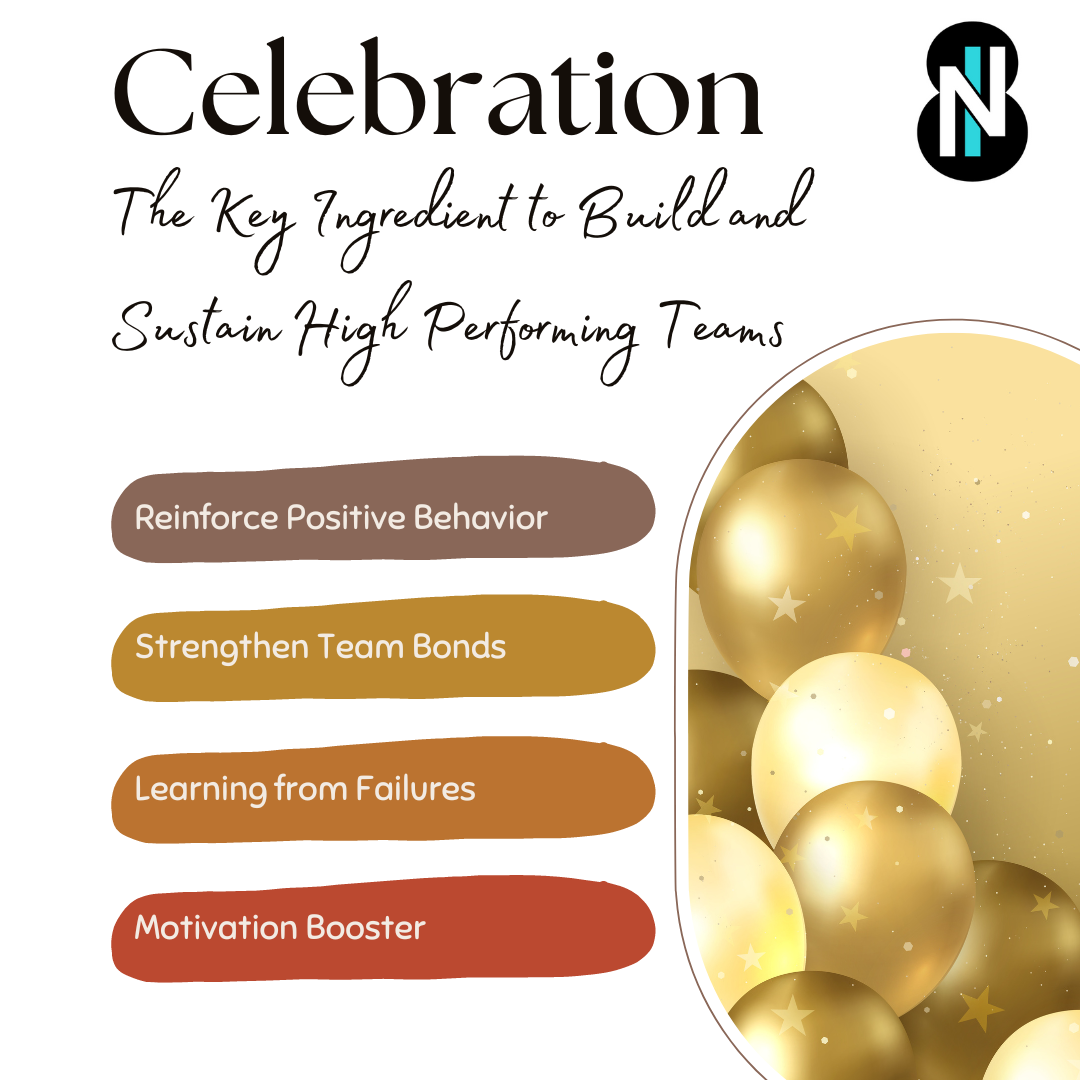
Celebration: The Key Ingredient to Build and Sustain High Performing Teams
In essence, celebrations, whether they're team outings, appreciation emails, or award ceremonies, serve as fuel for motivation. They keep teams energized, appreciated, and committed to their roles. If the vision is to build high performing teams, then celebrating every step of the journey is non-negotiable.

Empathy: The Quiet Powerhouse to Build High Performing Teams
Building high performing teams requires more than just skills; it demands an understanding heart. A team environment where empathy is a celebrated trait ensures that individuals feel connected, valued, and ready to contribute their best.

Communication: The Heartbeat of High Performing Teams
When we speak of organizational development and success, communication consistently emerges as the cornerstone. The mission to build high performing teams hinges profoundly on effective, transparent communication.

Three Methods for Building a High Performing Team
Building a high-performing team is a continuous journey, not a destination. By focusing on robust communication, fostering empathy, and celebrating both successes and learnings, leaders can pave the way for creating teams that are not only successful but also deeply connected and motivated

Using Expansion and Contraction for Productivity in Teams
Using the lens of expansive vs contractive work can help save time in framing decisions and work in a unique way that stimulates different ways of thinking about challenges and opportunities in teams.

How Progressive and Conservative Viewpoints Shape Organizational Culture
The conservative approach may stifle growth by not changing or growing fast enough (Blockbuster anyone?) The progressive approach may change too much and too fast, creating chaos. Not every idea is a good idea, (Many are just downright bad) and risk is part of doing anything new. Thus a balance will be struck somewhere in-between based on the core attitudes and beliefs of the organization or group.

What General Relativity Can Teach Us About Teams, Leadership, and Engagement
So what does relativity have to do with teams leadership, and engagement? You can use the model to better understand work in relative and absolute terms. Here are three possible applications:
1. Defining Quality of Work
2. Gaining Perspective for Decision Making
3. Measuring Results

Boost Employee Engagement with Bare Bones Drafts
Imagine pouring your best effort into a project or deck, only to have it completely reversed or changed when shared. Not only is this a detriment to engagement of an employee or team, but it might even result in turnover if it happens often.
This is a huge problem for leaders that are not great communicators.
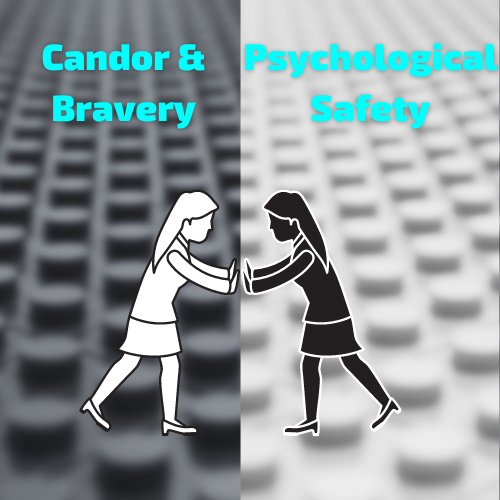
Balancing Candor with Psychological Safety in Senior Leadership Communication
Most of the things discussed were expected - things like collaboration, trust, sharing, alignment, and more.
However where the tension popped up was between candor & bravery and psychological safety & support.
This was a great framing of the complexity inherent in group dynamics.
So did we solve it?

Unraveling Thoughts: LEGO Serious Play for Goal Setting
In a recent presentation on play, I shared this exercise as a way to view a goal in a unique way- by using LEGO bricks!
Step 1: Build YOU
Step 2: Build your goal - what is it you are trying to achieve
Step 3: Build the most likely barrier to your success - place it between you and your goal.
Step 4: Build how you will prevent this barrier or overcome it.
Although this isn’t technically LEGO Serious Play - You are using the elements of metaphor, 3D, and mental offloading to better understand your scenario. Imagine how much more powerful this could be if done in a group! (Hint- A lot!)

Unlocking the Mind: Achieve Clarity with LEGO Serious Play
Your mind is a messy attic…
There is a ton of stuff being stored up there and you can't always access what you want.
With objects, we can mentally offload information onto them, allowing us to see, rearrange, and even play with them, providing new perspectives and a deeper understanding. You also get benefit of externalization.
On top of these benefits, we get something called detachment gain. According to Daniel Reisberg, this is the cognitive benefit we receive from putting a bit of distance between ourselves and the content of our minds