What Will Still Matter When AI Changes Everything About Work
Your competitors can copy your AI tools. They can't copy the quality of your team's relationships or the depth of trust in your culture.
"This is the absolute worst handwriting I've ever seen. You should be embarrassed."
Yeah, you got me.
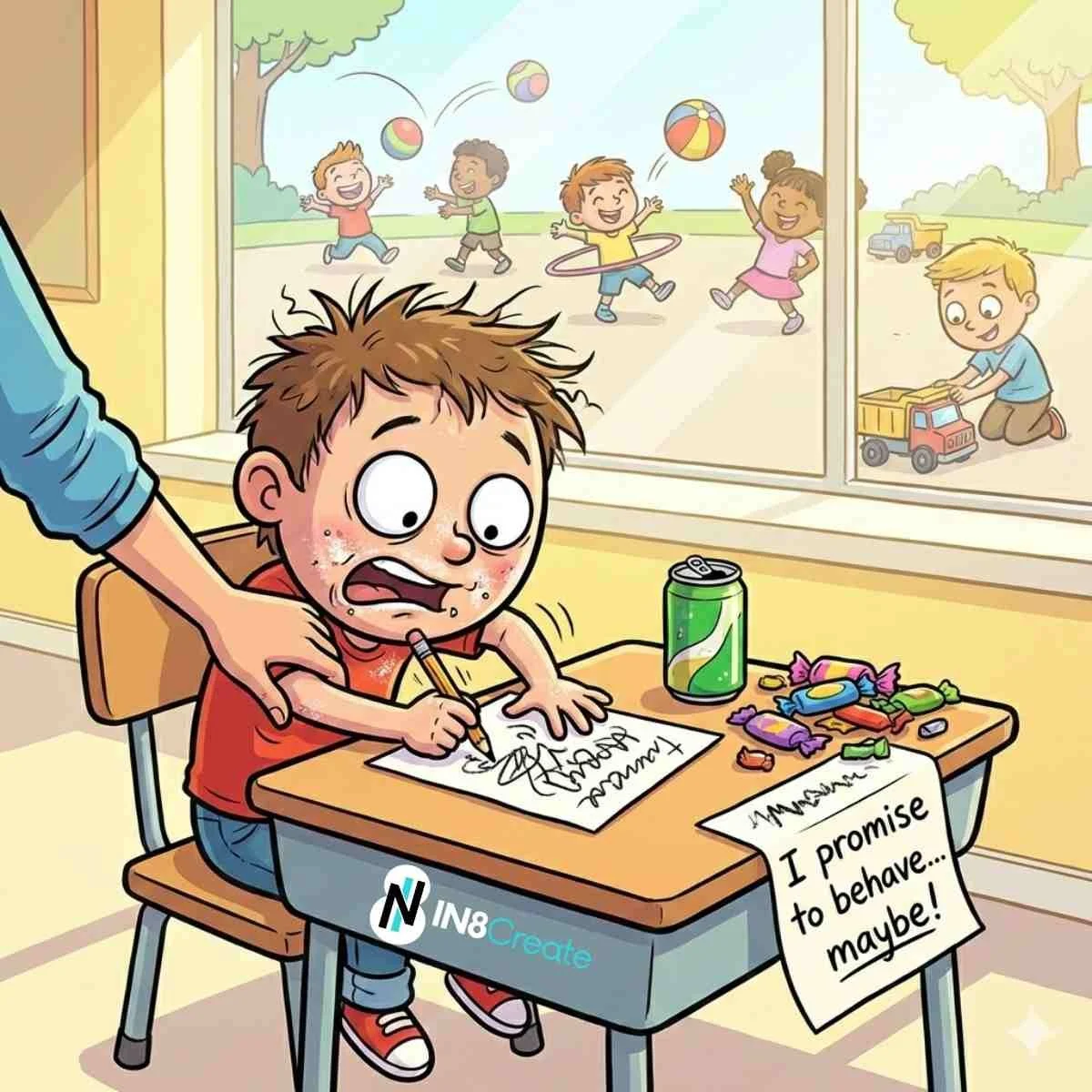
One of my college jobs was selling high-end electronics, and we'd hand-write thank-you notes to our clients. Problem was, I write like a five-year-old on a sugar high being held back from recess—not well.
But I had this understanding that computers were the future, so I wasn't too worried about my penmanship. Yet this English teacher I sold a DVD player to was furious. I honestly couldn't understand why.
Fast forward more than a few years...
Can you imagine working without email today? Sounds crazy, right? How did people even communicate? In person? Letters? Carrier pigeons?
Yet just 30 years ago, email was barely entering the workplace. And 30 years before that, most people worked in factories or physical labor roles. The way we work has always been in constant flux—we just have short memories about it.
The Pattern You're Missing
Here's what happened with email that most people forget: things that seemed critically important suddenly didn't matter as much (like my terrible penmanship), while entirely new challenges emerged (hello, reply-all disasters and inbox overload).
With AI, you're seeing the same pattern play out. It feels revolutionary—and it is—but constant change has been the only norm for generations. You're not experiencing something fundamentally new; you're experiencing the latest acceleration of something that's been happening your entire career.
What Your Team Actually Needs Right Now
You're using AI just like you used email—for time and efficiency. That part won't change. Your AI tools will get better at automating tasks, just like email got better at organizing information.
But here's what the research is now screaming: the human parts of your work aren't becoming less important. They're becoming the only thing that matters.
McKinsey's research shows that over 70% of workplace skills remain relevant in the AI era—they're just applied differently. And the 12% that are purely human? Those are becoming your competitive advantage.
Think about it: When your team can automate the routine stuff, what's left? The messy, complicated, human stuff. The conversations where someone's frustrated but won't say why. The moment when your best engineer has a game-changing idea but needs psychological safety to share it. The cultural friction that kills transformations before they start.
The Uncomfortable Truth About Your AI Strategy
You're probably focused on which AI tools to adopt and how to train people to use them. That's necessary, but it's not sufficient.
Your real challenge isn't technological—it's relational. Your team members are wondering if they'll still have jobs. They're trying to figure out where they fit in this new world. Some are excited. Others are terrified. Most are keeping those feelings to themselves in meetings, then discussing them in Slack channels you're not in.
That's the space where your transformation succeeds or fails. Not in the AI implementation plan—in the conversations happening when you're not in the room.
What Actually Deserves Your Focus
Here's your filter for the next five years: Find the most human part of what you do—the creative, interactive, curious, connective work that requires people—and amplify the hell out of it.
Use AI to eliminate the tasks that drain your team's energy. But then redirect that energy toward the things only humans can do:
Building trust so people will actually tell you when something isn't working
Creating safety so your quiet team members share their brilliant ideas
Navigating conflict that AI can identify but can't resolve
Making judgment calls in the gray areas where data doesn't give you answers
Fostering creativity that comes from diverse perspectives colliding
Your competitors can copy your AI tools. They can't copy the quality of your team's relationships or the depth of trust in your culture.
Five Years From Now
You want to know what work will look like in five years? Here's my prediction:
The organizations that treated AI as primarily a technology problem will be struggling. They'll have amazing tools and mediocre results because their people don't trust each other enough to collaborate effectively.
The organizations that treated AI as an opportunity to double down on human connection will be thriving. They'll have the same amazing tools, but they'll also have teams that can navigate ambiguity together, solve novel problems, and adapt faster than anyone thought possible.
The technology will level the playing field. Your culture won't.
What You Can Do This Week
Stop for a moment and ask yourself: Where is the human element in your work? What's the creative, curious, connective tissue that requires people?
That's not a soft skill anymore—it's your core competency in an AI-enabled world.
Your bad handwriting (or mine) doesn't matter anymore. But your ability to read the room, build bridges between people, and create an environment where everyone's intelligence gets used? That's never been more valuable.
What do you think? What will work look like for your team five years from now?
Looking to navigate major change with your team? Sometimes uncertainty needs more than communication - it needs structured dialogue where everyone can surface their real concerns. Let's talk about what that could look like for your team. We’re based in NYC!
Related Posts
Want to dive deeper into building teams that thrive through change?
Creating a Resilient, Future-Ready Workforce - Your team's ability to adapt isn't about surviving disruption—it's about building the capacity to thrive through it.
When Teams Unite Under Pressure - Crisis reveals what really matters in teams. Here's what makes some teams stronger under pressure while others fall apart.
Building Stronger Connections in Teams - The practical guide to building the human connections that make everything else possible.
Trust in the Modern Workplace: The Unsung Hero of Team Success - Trust isn't a nice-to-have anymore. It's the infrastructure that determines whether your AI investments pay off.
Three Ways to Build Connection in Teams - Three specific, actionable approaches to strengthening the connective tissue in your team.
