How Are You Keeping Score?
Why AI Adoption Needs Behavior-Based Goals, Not Outcome Targets
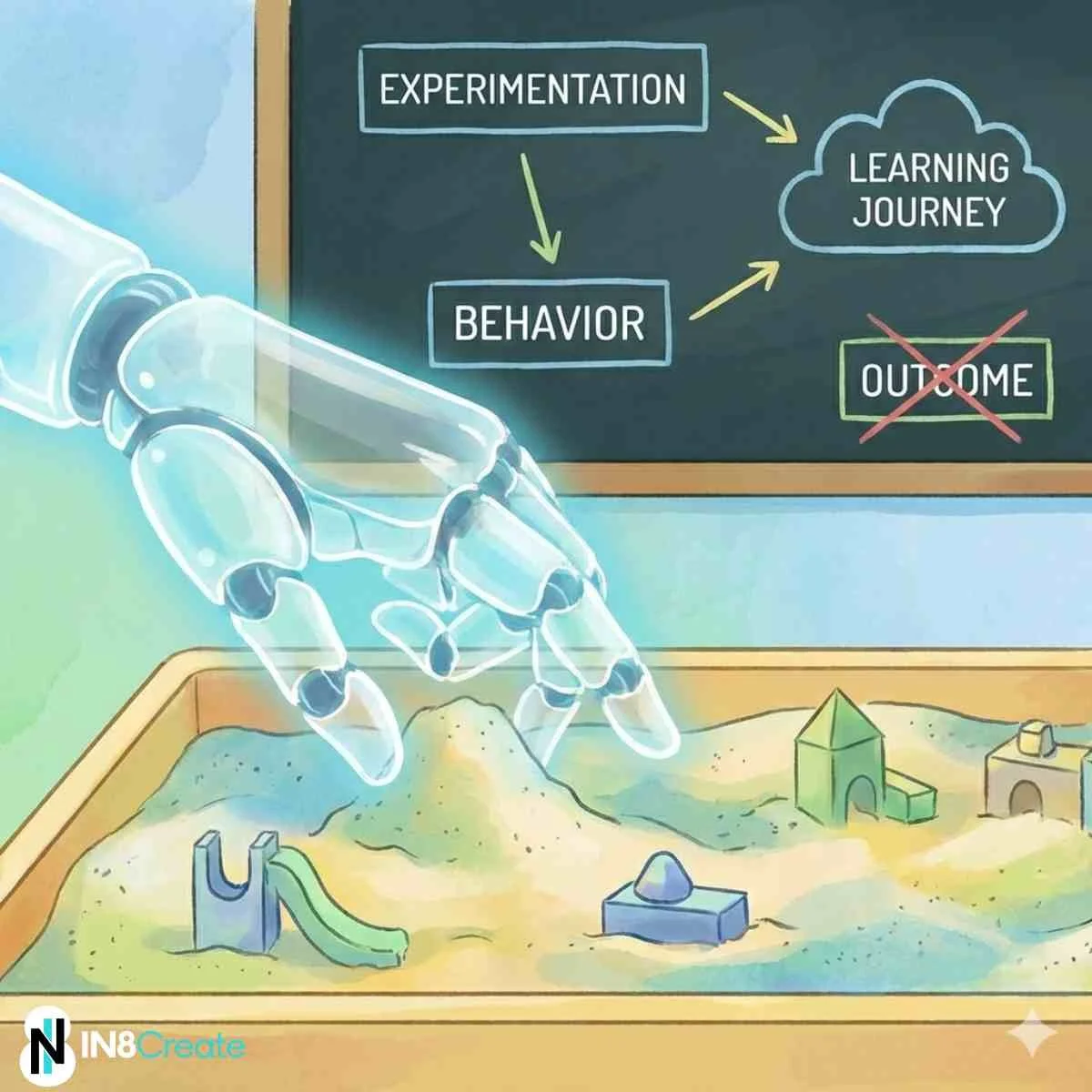
When AI adoption focuses on experimentation and behavior instead of uncertain outcomes, your team builds a learning journey that actually sticks—one small action at a time.
How Are You Keeping Score?
You're probably getting pressure from your board or leadership about AI adoption. They want to see results. They want metrics. They want proof that you're "using AI strategically."
But here's the problem: You don't actually know what success looks like yet.
And that's not because you're doing something wrong. It's because you're in genuinely new territory. The outcomes are uncertain. The best practices haven't been written yet. You're supposed to transform your business with a technology that's evolving faster than anyone can track.
So you do what most leaders do in this situation: you keep doing more of the same, hoping that activity equals progress.
The Problem with Traditional Goal-Setting
When you set traditional outcome-based goals for AI adoption, you run into a fundamental issue: You're trying to measure success in a game where the rules haven't been established.
Your finance team wants ROI projections. Your strategy team wants adoption metrics. Your board wants transformation milestones. But you're essentially being asked to predict the exact weight you'll achieve on a diet you've never tried for a body you don't fully understand.
It's exhausting. And it's probably making your team anxious about "getting it right."
What If You Measured the Behavior Instead?
Think about how you approach something like personal fitness. If you're at a healthy baseline trying to maintain it, you probably don't obsess over hitting exactly 178.3 pounds. Instead, you focus on the behaviors: play basketball twice a week, lift weights, do yoga, walk regularly, follow your dietary guidelines.
The number on the scale becomes less important than the pattern of behaviors that keep you healthy.
Your AI adoption strategy could work the same way.
Instead of demanding that your team "achieve 40% productivity gains through AI implementation by Q3," you could focus on behavior-based goals that create learning and experimentation.
What Behavior-Based AI Goals Actually Look Like
Here are a few examples of goals that focus on the doing rather than demanding uncertain outcomes:
"Teach AI one task you absolutely hate doing."
Not "automate 25% of your workload." Just find that one repetitive, soul-crushing task and experiment with offloading it. See what happens. Learn from it.
"Ask AI to analyze your data and play devil's advocate to your hypothesis."
You're not measuring whether AI is "right." You're measuring whether you're building the habit of using AI as a thinking partner, challenging your assumptions before you commit to decisions.
"Get a conflict resolution expert's perspective on that recurring team friction."
You know that tension that keeps surfacing between departments or team members? Ask AI to analyze it from a conflict resolution lens - why it might be appearing, what underlying needs aren't being met, how it could be resolved. You're not measuring whether the conflict disappears. You're building the discipline of seeking deeper understanding before reacting.
The beauty of these goals? Your team can actually achieve them this week. They know when they've done it. And each one teaches them something about how AI actually works in your specific context.
Start with Your Curious People
Here's something you probably already know but might be hesitating to act on: Not everyone on your team needs to be experimenting with AI right now.
If you're in an experimental phase (and let's be honest, everyone is), you don't need company-wide mandates. You need your naturally curious people playing with it. Your entrepreneurial thinkers. The ones who get excited about new tools rather than anxious about them.
Let them experiment. Let them share what they learn. Let it cascade organically.
You'll get better adoption from five people who genuinely want to explore AI than from fifty people who were told they have to use it.
The Real Question
So here's what this comes down to: Are you measuring AI adoption by behaviors you can control, or by outcomes you're guessing at?
Because right now, you probably can't predict whether AI will save your team 30% of their time or transform your business model. But you can absolutely know whether your team spent this week teaching AI to do something they hate, or whether they used it to challenge their thinking on that strategic decision, or whether they gained new perspective on that recurring conflict.
And those behaviors? They're the ones that will eventually lead to the outcomes you're looking for - you just can't predict exactly what those outcomes will be yet.
Your team is probably capable of amazing things with AI. But they won't get there by trying to hit productivity targets in a technology they're still learning.
They'll get there by building habits, one behavior at a time.
What's the first behavior you want them to try this week?
Want help designing behavior-based goals for your team's AI adoption? Let's talk about what that could look like for your team. We’re based in NYC!
Related Posts:
If you're navigating AI adoption challenges:
Stop Treating AI Adoption Like a Light Switch - Why forcing immediate AI adoption creates resistance instead of experimentation.
The AI Air Sandwich: The Gap Between AI Strategy and AI Execution - When leadership has AI vision but teams are stuck in execution paralysis.
If you're dealing with transformation friction:
The Friction Factor: What's Really Holding Your Team Back? - Identifying the hidden obstacles that slow down change initiatives.
Identifying Leadership Friction in Teams - How leadership approaches create unintended resistance.
If you want to build stronger team foundations:
The Foundations of Amazing Teamwork - Core principles that make behavior-based goals actually work.
Witnessing True Team Engagement - What real engagement looks like (hint: it's not what you think).
If you're rethinking performance metrics:
Three Methods for Building a High Performing Team - Different approaches to measuring what matters.
The Scoreboard Effect: How to Build Team Standards That Stick - Making goals visible and meaningful without creating pressure.
