

Insights
Creating A Resilient, Future-Ready Workforce
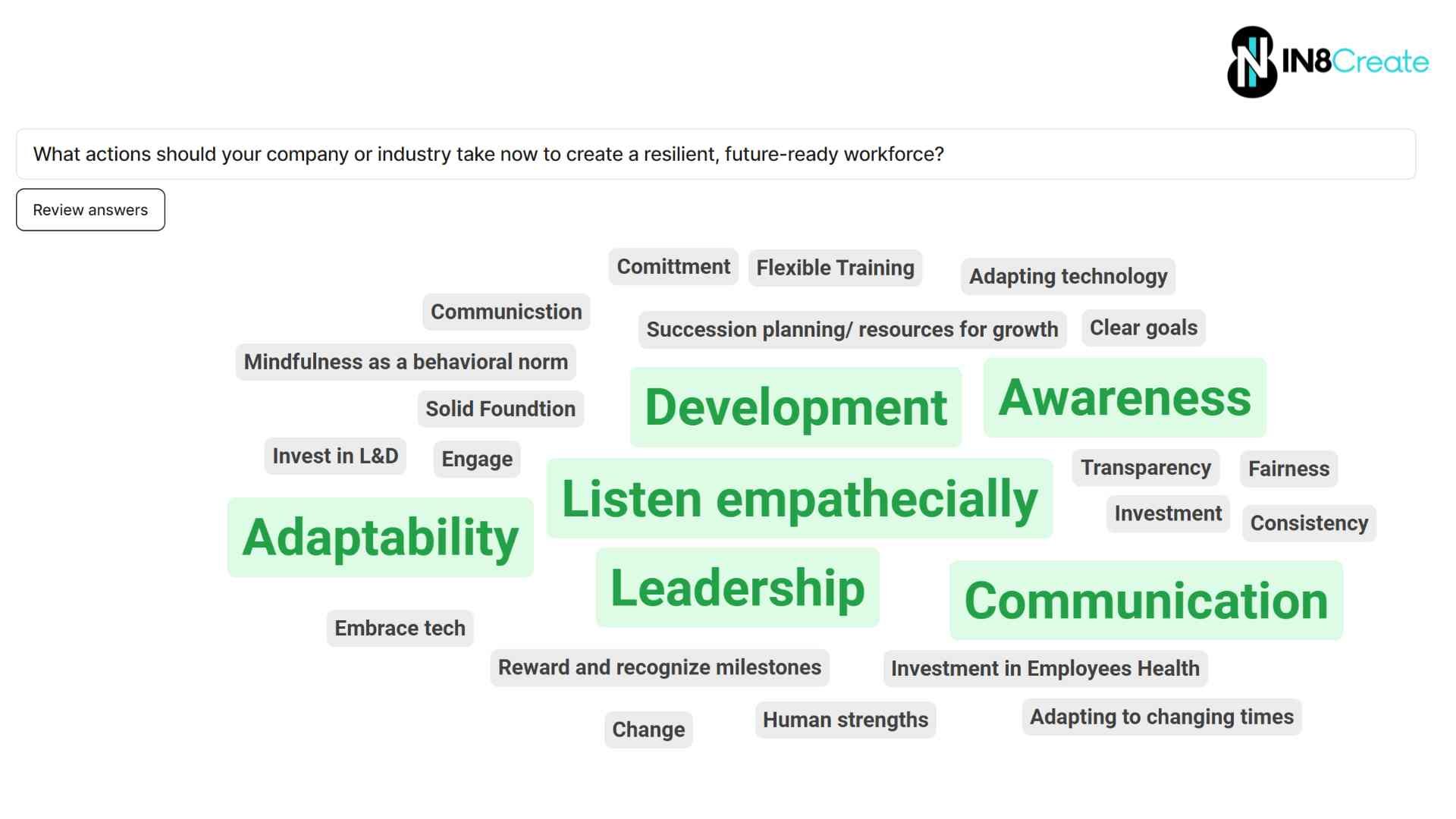
In our recent "Build Your Future Workforce" workshop with the Westchester Human Resource Management Association (WHRMA), we explored a crucial question: What actions should companies take now to create a resilient, future-ready workforce? The responses from participants were diverse and insightful, highlighting the complexity of this challenge

Who are Your Team Anchovies, Who is Your Salt?
This is the hard part of being a leader - often times leaders are given teams that they didn't hire, figuring out how to assemble the best recipe with a set amount of ingredients. While the leader may set the table for the culture of the team, how each person shows up and interacts determines the true flavor of team itself.

Fostering Team Success Through Individual Responsibility
By fostering an environment where team goals are prioritized and each member feels responsible for the team's success, organizations can create stronger, more cohesive teams. Remember, a great team is not just a group of talented individuals, but a synergistic unit where the whole truly becomes greater than the sum of its parts.

Does Your Team Cheer Each Other On?
When Lily Zhang of the US Ping Pong team was playing for gold, Ant was right there in stands cheering her on. And you can tell he is truly excited for her. This is the person we all want to be on a team with. A person that wants to win and one that will cheer us on with full throated support.

Communication Chronicles: Sitcom Reflections
Each of these workplaces, despite their unique challenges, offers valuable lessons in communication, teamwork, and caring for one another. The choice ultimately depends on your personality and what you value most in a work environment.

Communication Chronicles - Insights from the Yoga Mat
After understanding the "Why" of the poses, it became easier to understand how to adapt and if I needed to do something completely different. Here is how you adapt this to team communication: Share what outcome people are trying to get to and why it's important. Be succinct: Explain clearly with as few words as possible. Be consistent in how you communicate

Team Communication Lessons from Jury Duty
Here is how these could apply to any other communication challenge: Know the problem(s) you are trying to solve. Know what your audience needs (and in what order). Deliver the shortest most succinct messaging that can solve for both. If possible, get feedback, learn, iterate.
The Hidden Complexity of Team Communcation
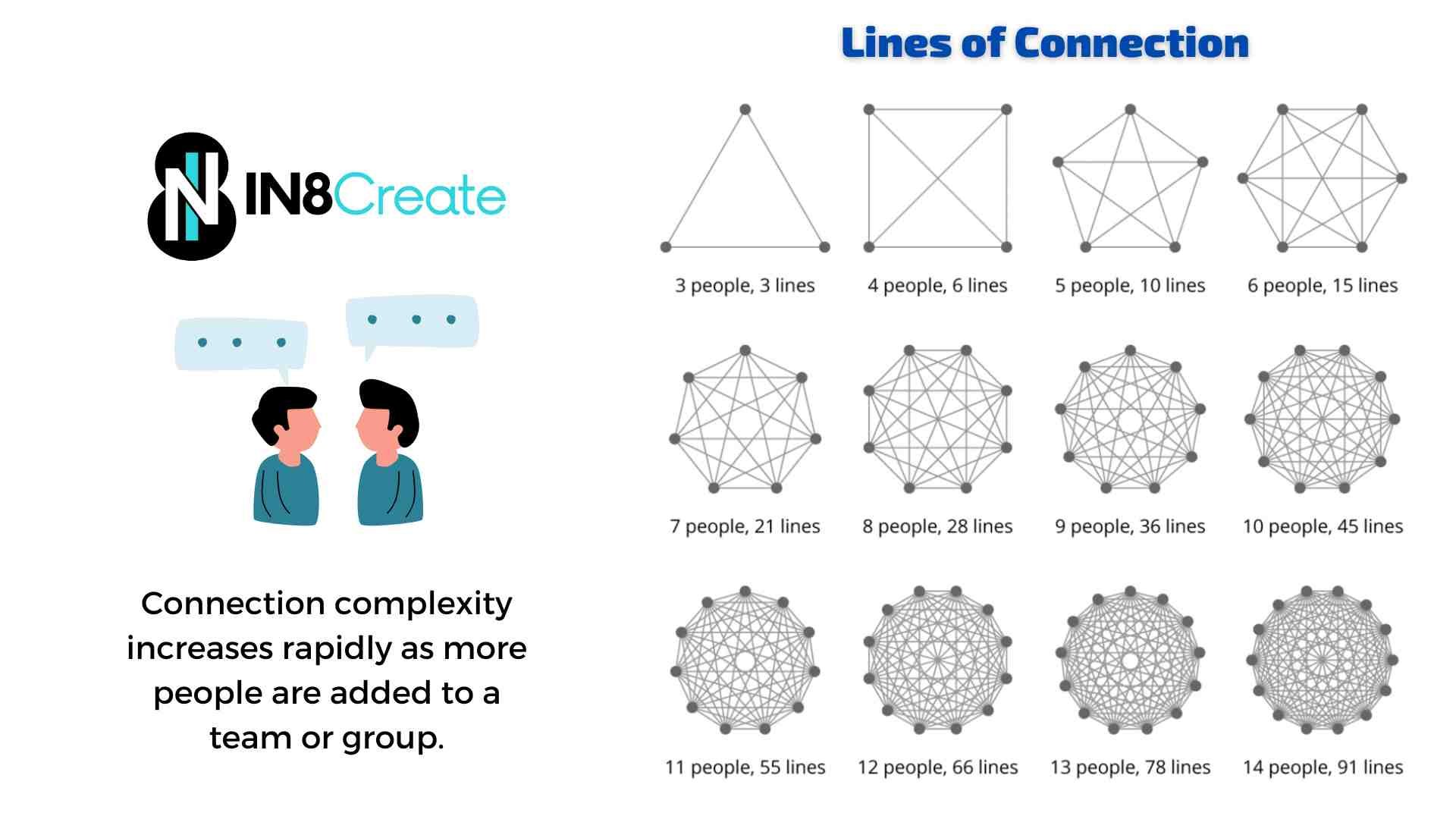
When it comes to team communication, things are often more complex than they appear. Just like adding an ingredient to soup changes every bite, adding a new person to a team changes every group interaction. This complexity scales quickly and can become challenging to manage without the right tools and strategies.

The Power of a Spotter in Team Meetings
By appointing a “spotter” in your team meetings—someone whose sole responsibility is to observe body language and verbal cues—you can ensure that these often-overlooked signals are captured and addressed in real-time. This role can help unearth key insights and balance the extrovert/introvert equation, ensuring everyone's perspectives are considered.i
The Human Communication System in Teams
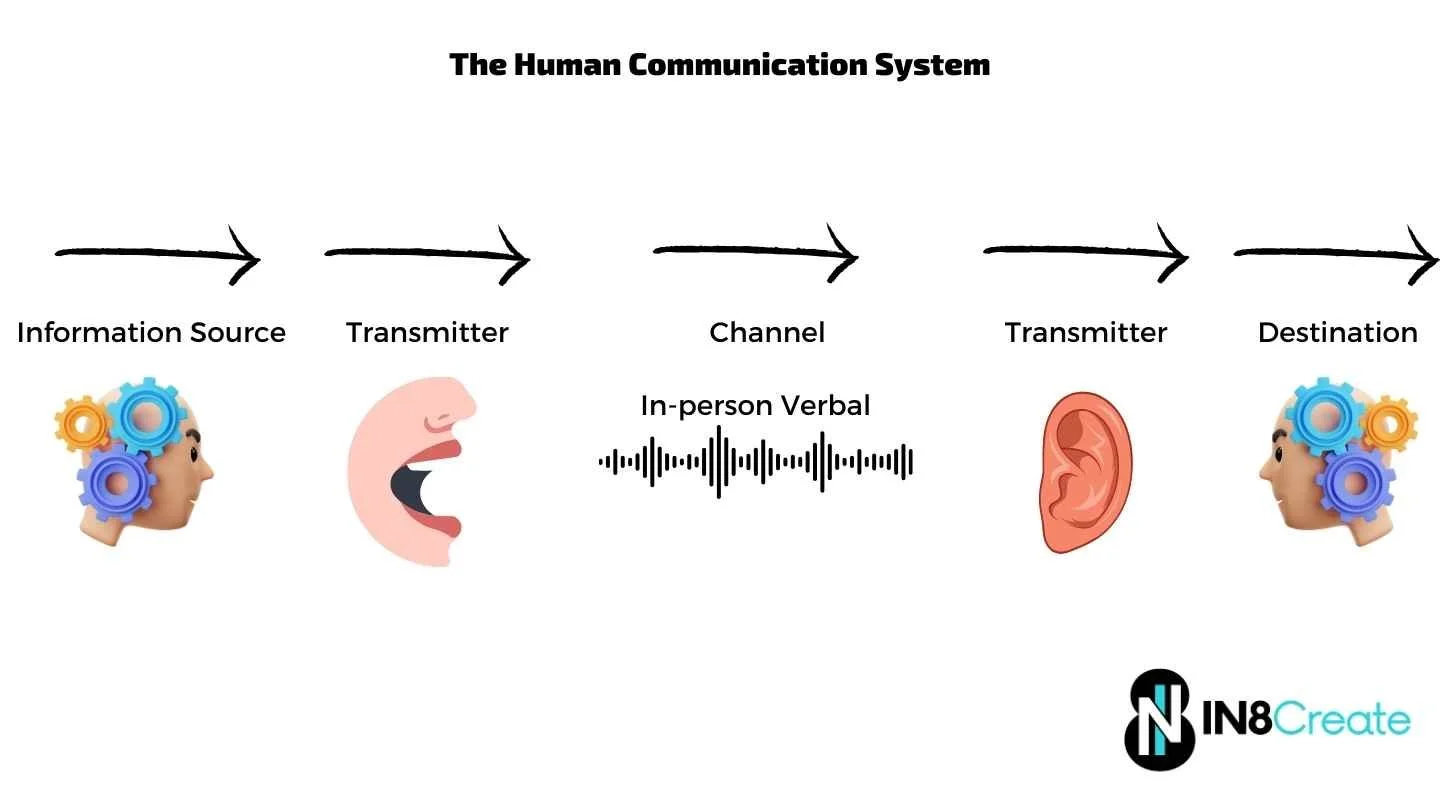
Using this as a mental model makes it easy to see why and how communication breakdowns happen, especially in teams.
For this post, I'll dig specifically into the system itself, applying the 5 stages of a communication system to people, and then extract how this impacts people and teams in various scenarios. Once you see how the system is easily applied, you'll be able to deconstruct communication challenges in a new and simpler way.

Hierarchy of Communication Challenges: Unveiling the Layers
Effective communication is often cited as the cornerstone of successful organizations. However, communication issues are typically symptoms of deeper, underlying challenges. By understanding these layers hierarchically, companies can pinpoint where true communication challenges lie and address them more effectively. Let's explore this hierarchy and uncover the root causes of communication breakdowns.

An Easy Team Building Question to Boost Connection
Here is why I think its such a powerful question:
1. Its safe: We don't know much as kids, so whatever we wanted to be was guided by the small world we understood.
2. It's fun: This brings us back to a simpler time, and when we use LEGO's, this adds to the playful nature of the question, and a playful time in our lives.
3. It's somewhat revealing: Not too deep, but it can show passions that may still be alive today
4. It allows us to see others with more depth and dimension.