Why 'We Need To' Never Works
And What to Say Instead
The Subtle Language Trap That Kills Team Buy-In
"We should learn these 7 plays," one guy texts. YouTube link attached.
"We should try this motion offense," another shares. Ten-minute read explaining exactly what we need to do next.
"We should..." (insert any other idea here, doesn't matter)
Did any of it stick?
No.
Of course not.
My men's basketball team is a bunch of strangers, grouped together and told to be a team. We have a captain, but that mostly means handling admin stuff—booking court time, managing the group chat.
So what do you do when good ideas keep flying but nothing actually lands?
This is group dynamics territory. And it's fascinating.
We're technically still in the norming stage, but we're not progressing. It's not that people don't want to work together. Everyone means well. But we're working against some invisible constraints.
Constraint 1: Complexity. Building out a working offense with plays sounds great in theory. Each person's idea makes sense in isolation. But we haven't even practiced yet. You can't absorb seven YouTube plays before tip-off.
Constraint 2: Ego threat. None of the ideas are inherently bad. But if we're being honest, some of the suggestions are as much about winning the idea contest as making the team better. Whose system gets picked? Whose gets ignored?
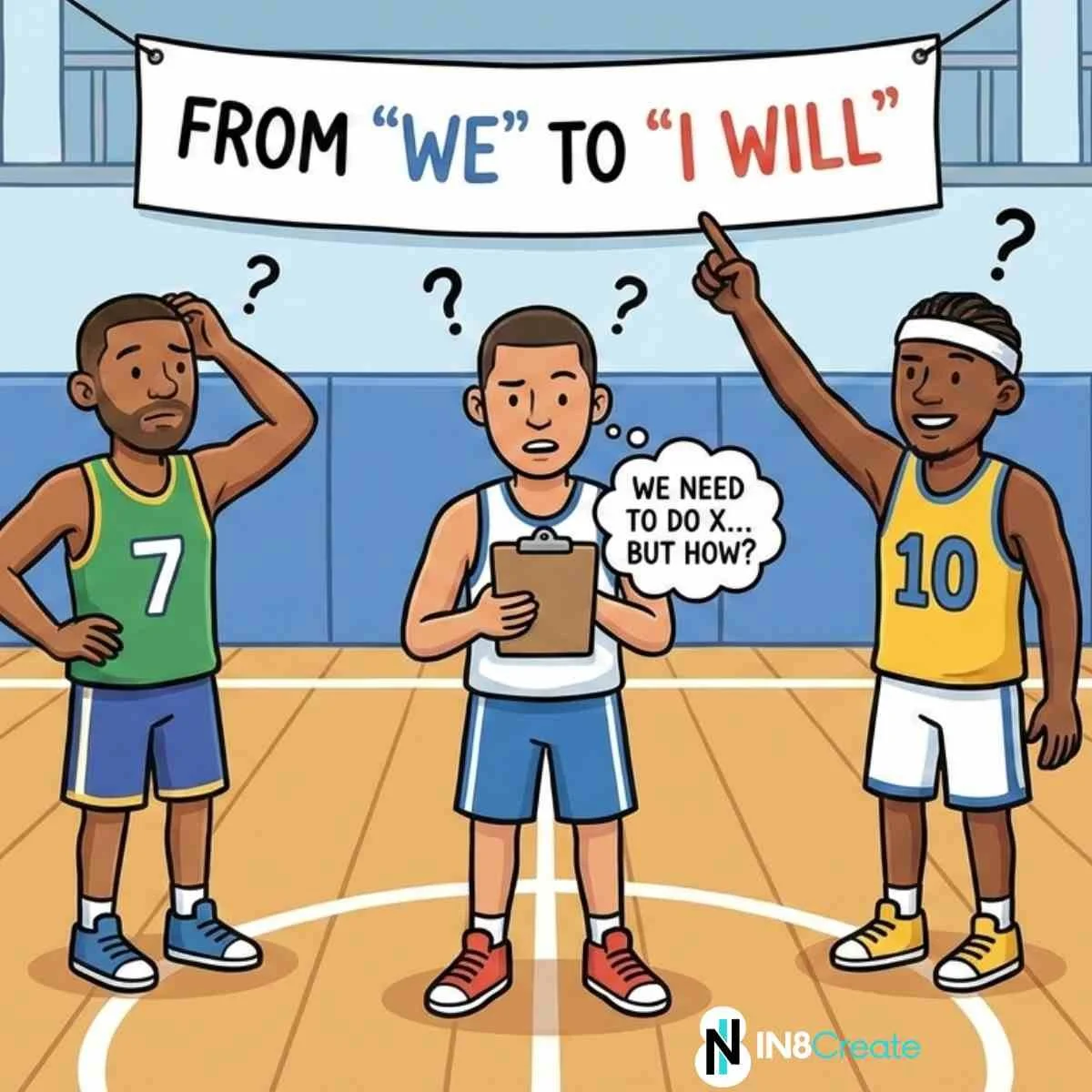
Constraint 3: "We" language. This one's subtle, but it's the killer. The people who keep saying "we need to" are speaking for the collective without permission—and without the earned respect to do so.
I saw this constantly in my corporate days. "We need to" sounds collaborative, but it's usually aimed at what other people need to do. It's saying "you need to do this," just softened with a pronoun that includes the speaker. It's not softer. And people aren't stupid.
Here's the thing: these are all good dudes. I genuinely believe everyone means well. But communication and group dynamics are funky. Good intentions don't guarantee good outcomes.
What actually worked:
At our last game, I tried something small. Instead of "we need to," I suggested we shift our language to "what are you going to do?"
You can't control the whole team. You can't force a system that nobody bought into. But you can commit to your own behavior. You can decide that you will set a screen. You will make the extra pass. You will box out your man.
It's not about being selfish—it's about being accountable to something you can actually control.
The difference is subtle but everything. "We need to run plays" puts the burden everywhere and nowhere. "I'm going to set a screen on every possession" is a commitment someone can actually keep.
The workplace parallel writes itself. How many meetings have you sat through where everyone agrees "we need to communicate better" or "we need to be more aligned"—and nothing changes?
That's because "we need to" is a sentence without an owner.
The shift isn't complicated. It's just uncomfortable. Because the moment you say "I will," you're accountable. There's no collective to hide behind.
But that's also when things actually start to move.
What's one "we need to" floating around your team that might benefit from becoming an "I will"?
Based in NYC, we help teams turn good intentions into real accountability—through workshops that surface what people actually think (not just what they say in meetings). Reach out to start a conversation.
